Tracing Career Milestones Through Synchronized Blog Archives and Project Media Libraries
Mia Lange · Aug 24, 2026

Tracing Career Milestones Through Synchronized Blog Archives and Project Media Libraries
Professionals maintain synchronized blog archives alongside project media libraries to document career progression in structured, searchable formats that align chronological entries with visual assets. These systems connect written reflections from blog posts directly to corresponding media files such as images, videos, adn presentations stored in centralized repositories. Data from the U.S. Bureau of Labor Statistics indicates that workers in knowledge-based fields increasingly rely on digital documentation tools to track advancements amid frequent role changes and project-based work.
Core Components of Synchronized Systems
Blog archives function as narrative timelines where individuals record project starts, completions, skill acquisitions, and role transitions in dated posts that reference specific outcomes. Project media libraries complement these entries by housing supporting files tagged with metadata including dates, keywords, and project identifiers. Synchronization occurs through platforms that automatically link blog content to media uploads, ensuring that a post about a completed initiative pulls relevant visuals without manual duplication. Observers note that this integration reduces retrieval time and preserves context across evolving career stages.
Metadata standards play a central role in maintaining consistency across both archives and libraries. Tags for skills demonstrated, tools used, and results achieved allow users to query records by criteria such as year or competency area. Research from Statistics Canada shows that professionals who apply consistent tagging protocols retrieve historical project details 40 percent faster than those relying on unorganized file systems. Automated scripts often handle the syncing process, matching blog publication dates to media creation timestamps to build accurate sequences without user intervention.
Implementation Practices in Professional Settings
Many professionals begin by establishing a central platform that supports both blogging and media storage, then configure rules to mirror new entries across components. For instance, a developer might publish a blog post detailing a software release while simultaneously uploading code samples and screenshots to the linked library, with the system generating cross-references automatically. As of August 2026, industry reports highlight growing adoption of open-source tools that enable such synchronization without proprietary lock-in. Those who have implemented these setups report streamlined preparation for performance reviews because all relevant artifacts remain accessible through unified search interfaces.
Case examples illustrate varied applications across sectors. One researcher documented a multi-year study through sequential blog posts paired with data visualization files in a media library, creating a verifiable record of hypothesis development and publication milestones. Another professional in design fields used the same approach to catalog client projects, with each blog entry embedding links to high-resolution renderings stored in the synchronized repository. These practices extend beyond personal use, as teams sometimes adopt shared archives to track collective achievements while preserving individual contributions through permission controls.
Benefits for Career Documentation
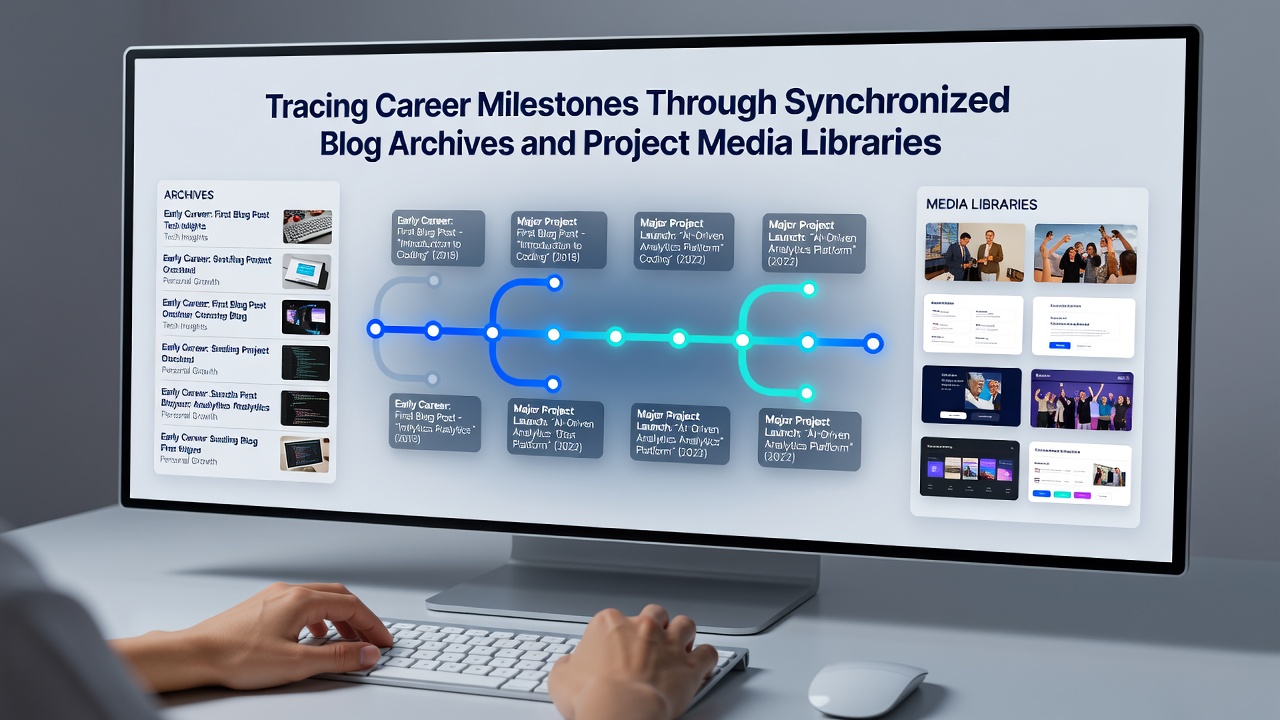
Synchronized archives support longitudinal analysis of career trajectories by allowing users to filter entries by time periods or thematic clusters. This capability proves useful during transitions such as job changes or promotions, where individuals need to compile evidence of impact quickly. Figures from the Australian Bureau of Statistics reveal that workers maintaining digital portfolios experience shorter periods between role advancements compared to those without organized records. The structure also facilitates external sharing, as professionals can export filtered views for portfolios or grant applications without reconstructing narratives from scattered sources.
Security considerations receive attention during setup, with encryption and access logs protecting sensitive project details. Backup protocols ensure that both blog text and media files remain available even if one component experiences disruption. Observers note that these systems scale effectively from individual use to organizational deployments, where multiple contributors add content under unified synchronization rules.
Future Directions and Integration Trends
Emerging developments include artificial intelligence features that suggest connections between new blog posts and existing media based on content analysis. Such enhancements further reduce manual effort while improving the completeness of career records. Integration with external platforms continues to expand, allowing direct pulls from version control systems or collaboration tools into the synchronized environment. Data indicates sustained interest in these methods as remote and hybrid work models persist into 2026 and beyond.
Conclusion
Synchronized blog archives and project media libraries provide structured mechanisms for tracing career milestones through combined narrative and visual documentation. Implementation relies on consistent metadata practices, automated linking, and secure storage protocols that together support efficient retrieval and analysis. Professionals across fields apply these systems to maintain verifiable records that aid both personal reflection and external presentations. Continued evolution of supporting technologies promises further refinements in how individuals capture and leverage their professional histories.