Mapping Individual Narratives via Interlinked Bio Overviews, Project Exhibits, and Embedded Visual Displays on Custom Domains
Eden Perry · Aug 26, 2026
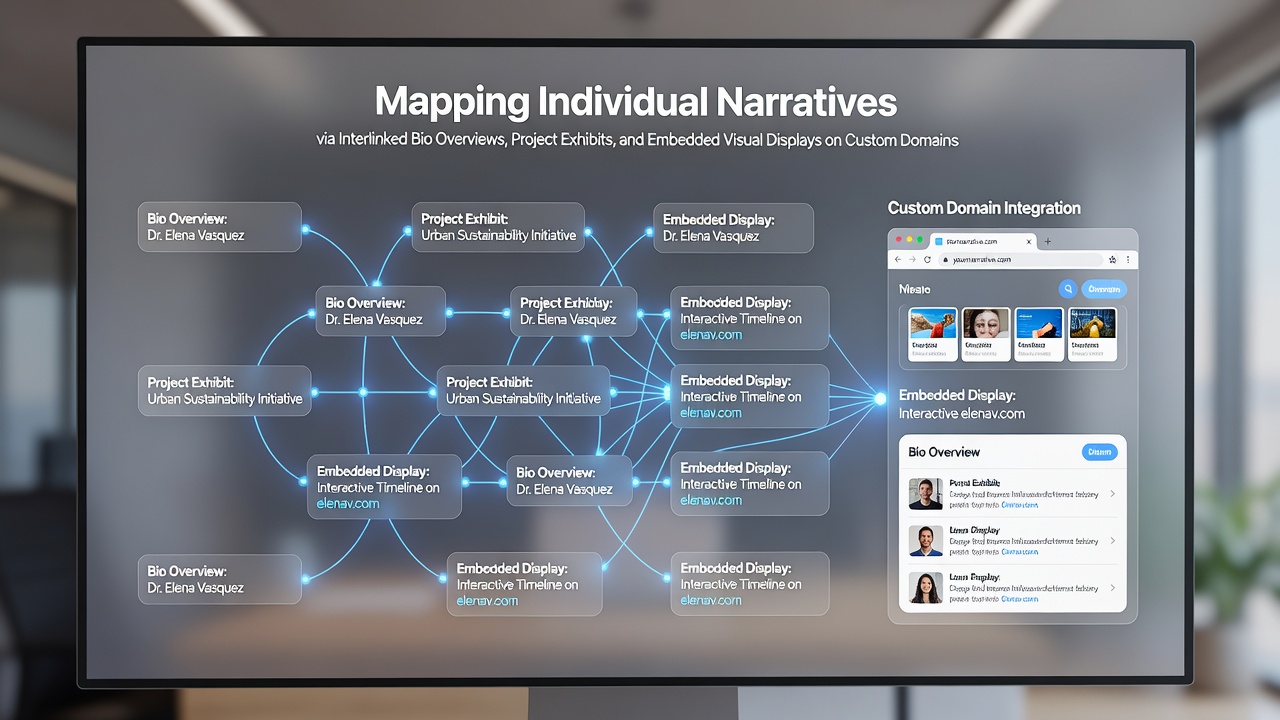
Mapping Individual Narratives via Interlinked Bio Overviews, Project Exhibits, and Embedded Visual Displays on Custom Domains
Individuals and professionals increasingly rely on custom domains to construct detailed personal narratives through interconnected biographical summaries, project showcases, and integrated visual elements that create cohesive digital representations of life experiences and career trajectories. These platforms allow users to organize information in ways that link biographical details directly to specific projects and supporting visuals, forming pathways that visitors can follow to understand chronological and thematic developments without relying on fragmented social media feeds or third-party hosting services.
Core Components of Narrative Mapping Systems
Bio overviews serve as foundational anchors on such sites, presenting concise yet expandable accounts of personal background, education, and key influences that connect outward to individual project exhibits through embedded hyperlinks and contextual tags. Project exhibits then expand on these connections by displaying timelines, descriptions, and outcomes that reference specific periods or themes from the bio sections, while embedded visual displays add layers of context through photographs, diagrams, and interactive media that load directly within the domain structure rather than redirecting externally. Observers note that this interlinking reduces navigation friction and supports deeper exploration, as data from domain analytics providers indicate higher average session durations when content pathways remain contained within a single custom environment.
Technical Implementation Approaches
Developers and users typically select content management frameworks that support modular page building, database-driven linking between sections, and responsive media embedding to maintain consistency across devices, and these choices often involve integration with domain registrars that offer straightforward DNS management alongside hosting options. Custom domains further enable branding consistency because the URL structure itself reflects the individual's identity rather than a generic subdomain, which in turn influences search visibility and professional credibility according to reports from web infrastructure organizations. In August 2026, domain registration trends showed particular growth in personal narrative sites among creative professionals and academics seeking standalone digital presences separate from institutional or platform-controlled environments.
Visual displays function as more than decorative additions when they include metadata and captions that tie directly back to bio entries or project milestones, creating a network effect where clicking an image can surface related textual content or launch a filtered view of similar exhibits. Researchers have documented cases where such systems improved information retention for site visitors because the visual and textual elements reinforce one another through spatial and sequential arrangement rather than linear scrolling alone.
Case Examples from Different Sectors
One documented instance involves an independent researcher who constructed a custom domain to map fieldwork projects alongside biographical milestones, using embedded maps and photo galleries that linked to detailed reports and allowed cross-referencing of locations with career phases. Another example appears in the work of a design professional who synchronized project exhibits with visual process documentation, enabling visitors to trace idea evolution through sequential image sets that reference specific bio highlights about training and influences. These implementations demonstrate how the same structural principles adapt across disciplines while maintaining the core interlinking logic that distinguishes this approach from isolated portfolio pages or blog archives.
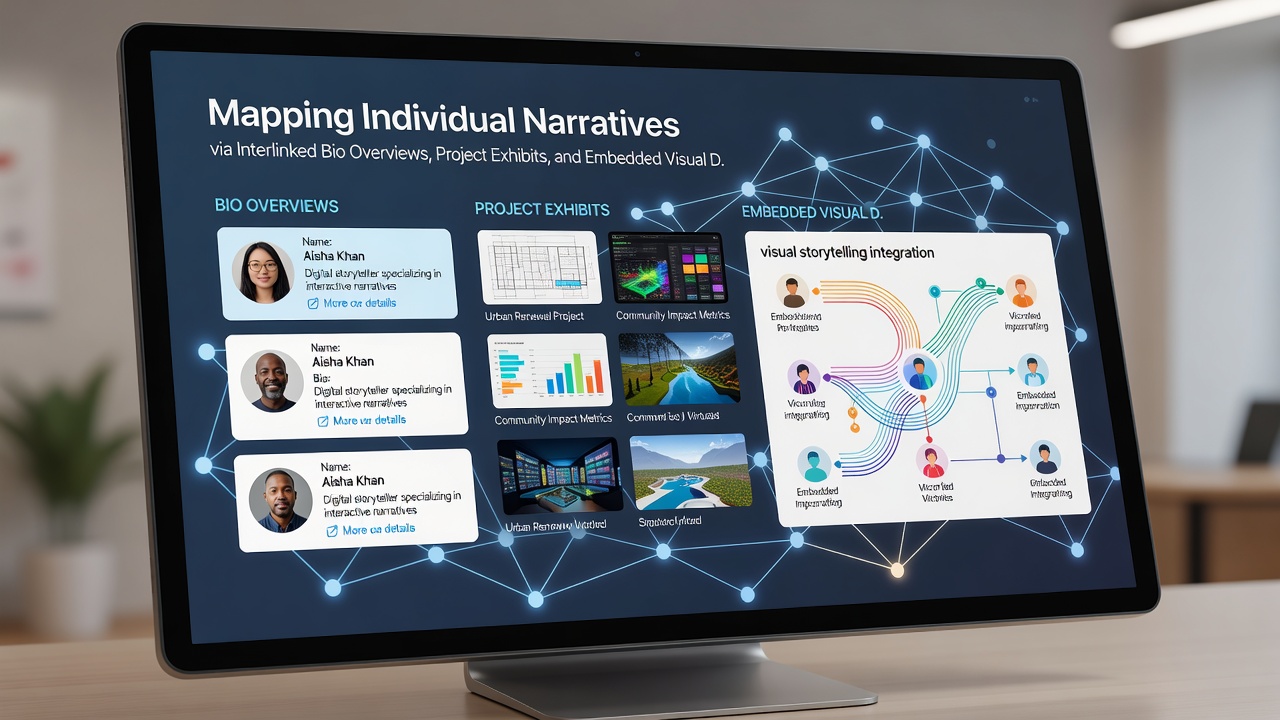
Industry analyses from organizations tracking digital content creation reveal steady adoption of custom domain solutions among those prioritizing long-term data ownership and narrative control, particularly as platform policy changes continue to affect content discoverability on centralized networks. A study conducted through the Australian National University examined how personal digital archives benefit from interlinked structures that preserve contextual relationships between biographical data and project outputs over extended periods.
Integration with Broader Digital Ecosystems
Custom domain setups frequently incorporate elements from external data sources such as publication databases or professional registries, yet keep primary navigation and visual presentation under local control to avoid dependency on third-party rendering. This hybrid model supports updates to project exhibits without altering the overarching biographical framework, and it allows visual displays to pull from cloud storage while remaining embedded within the domain's stylistic guidelines. Those who maintain such systems report streamlined workflows when content updates propagate across linked sections automatically through shared tagging systems rather than manual duplication.
European Union initiatives on digital cultural heritage have highlighted the value of interoperable personal archives that use consistent linking standards, enabling future migration or aggregation with larger collections while preserving individual narrative integrity. Data from domain monitoring services show that sites employing these interlinked methods experience lower bounce rates because visitors encounter multiple entry points that encourage continued exploration within the same environment.
Conclusion
Mapping individual narratives through interlinked bio overviews, project exhibits, and embedded visual displays on custom domains represents a structured method for presenting personal and professional histories in a self-contained, navigable format. The approach relies on deliberate technical choices around linking, media integration, and domain management that together create pathways for visitors to follow thematic and chronological connections. Continued development in this area aligns with broader trends toward user-controlled digital spaces, as evidenced by registration patterns and research findings from multiple regions through mid-2026.